
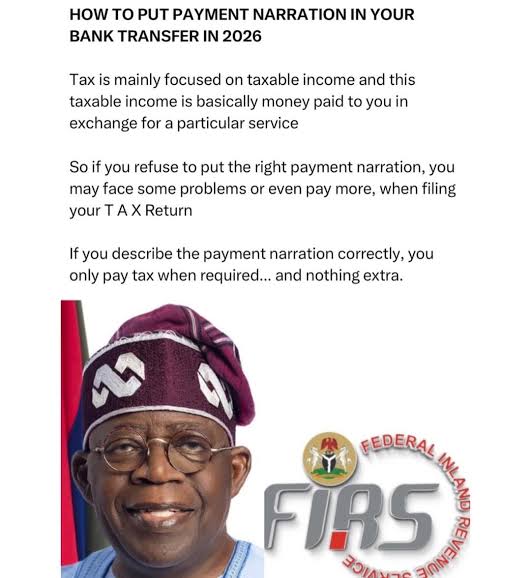
As digital banking continues to grow in 2026, bank transfers are now closely monitored by financial institutions and tax authorities. One small detail many people ignore—the payment narration—can make a big difference when it comes to taxation, account reviews, and financial clarity.
Writing the right narration helps you clearly explain why money was sent or received, reduces misunderstandings, and protects you from being wrongly assessed for tax.
This guide explains why payment narration matters and shows safe, legal, and clear examples you can use.
Why Payment Narration Is Important
Payment narration is the short description attached to a bank transfer. Banks and tax agencies often rely on this description to understand whether money received is taxable income or not.
If your narration is unclear or misleading, it may:
- Be treated as business income
- Increase your tax liability
- Trigger unnecessary questions from banks or tax authorities
Clear narration ensures you are only taxed when required by law.
Safe and Legal Payment Narrations You Can Use
Below are simple narration examples for common situations. These descriptions are clear, lawful, and widely accepted.
1. Money from Family Members
When a parent, sibling, or relative sends you money for support or personal reasons, it should not look like income.
Recommended narration:
Family support or Gift
2. Repayment of Money You Lent Out
If someone is returning money they borrowed from you, this is not income.
Recommended narration:
Refund or Reimbursement
3. Moving Your Own Money Between Accounts
Transfers between your personal accounts should be clearly identified.
Recommended narration:
Personal transfer or Savings
4. Receiving a Loan
When someone lends you money, it should be recorded as a loan, not earnings.
Recommended narration:
Loan received
5. Funding Your Own Business
If you put personal funds into your business account, it is not sales revenue.
Recommended narration:
Capital contribution
6. POS or Agency Banking Transactions
For POS operators, customer transfers should reflect the service provided.
Recommended narration:
POS transaction
7. Payments for Goods or Services
Business owners should ensure customers describe what they paid for.
Recommended narration:
Payment for purchased goods or Payment for services rendered
Specific descriptions are always better for record-keeping.
Common Mistakes to Avoid
- Leaving the narration field empty
- Using vague terms like payment or transfer
- Allowing all inflows to appear as business income
- Mixing personal and business funds without clear descriptions
These mistakes can lead to higher tax assessments and unnecessary disputes.
Final Advice for 2026 and Beyond
Financial transparency is becoming stricter every year. Proper payment narration is a simple habit that protects your money, improves your records, and keeps you compliant with tax laws.
Once tax deductions are made incorrectly, refunds are often difficult and slow. Being careful from the start saves stress later.
Conclusion
Payment narration is not just a banking formality—it is a financial safety tool. Whether you are receiving gifts, repaying loans, running a business, or operating a POS, clear and honest narration helps you stay on the right side of the law.
Stay informed, stay compliant, and manage your finances wisely in 2026